
Dr. Rachel Wallace Clostio (University of New Orleans)
Louisiana is in its second year of implementing a program aimed at boosting gopher tortoise populations in the state. Keep reading to learn more about what researchers are discovering about Louisiana's tortoise populations.
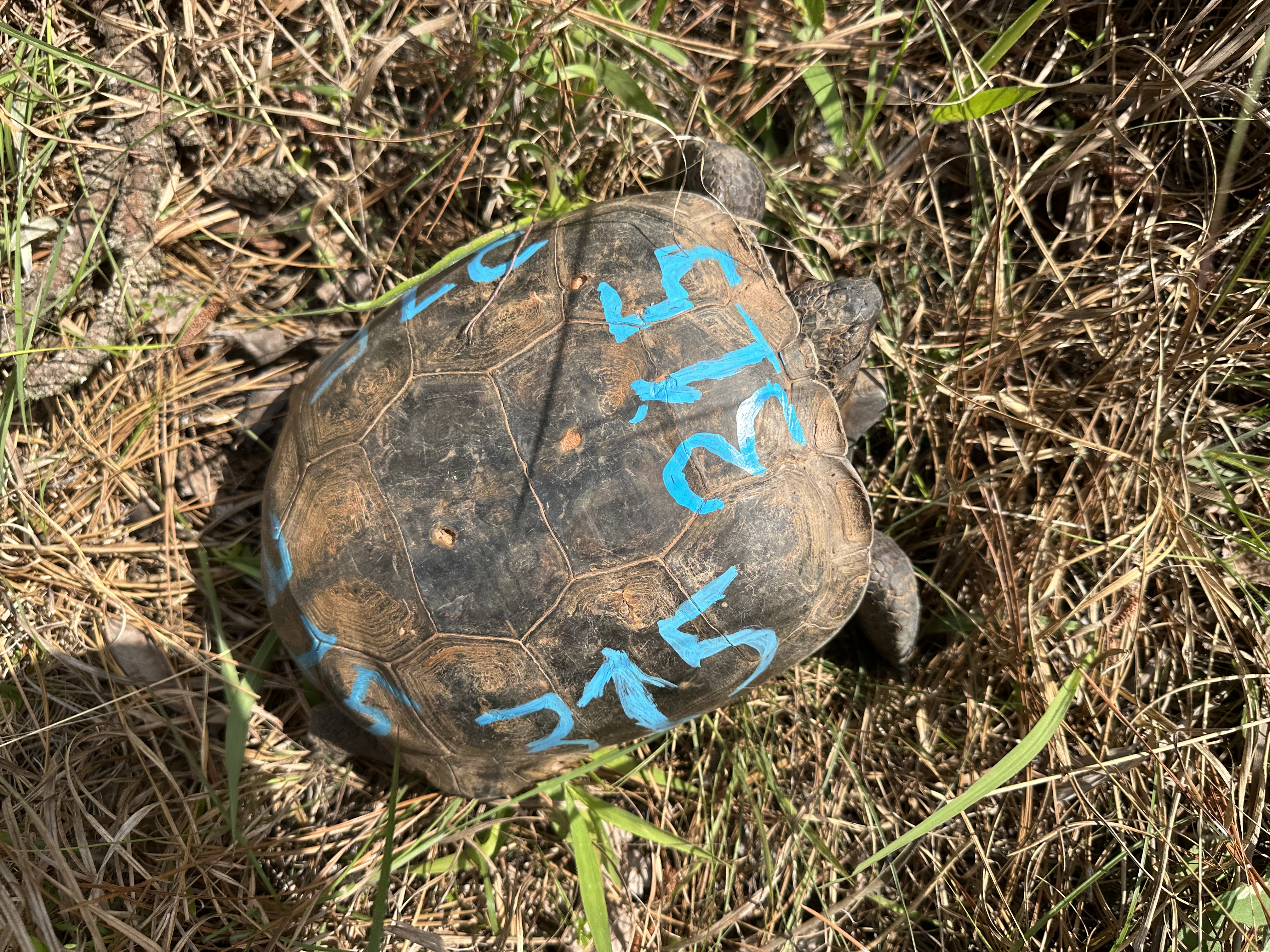
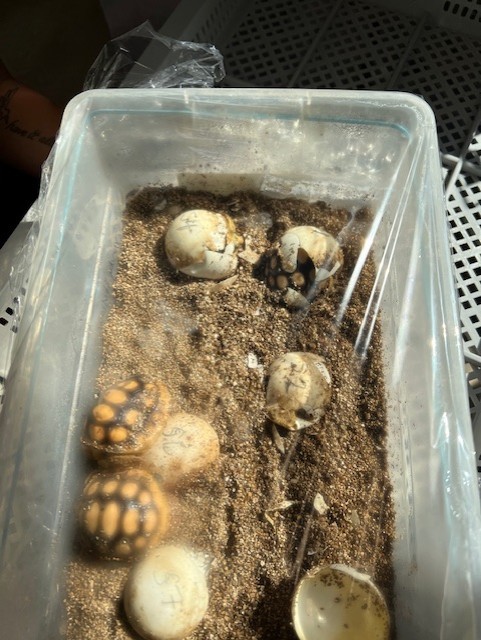
For year two of Louisiana’s head-start program, three gopher tortoise nests were collected from three different parishes and then transferred to the U.S. Fish and Wildlife Service-Natchitoches National Fish Hatchery in Natchitoches, LA, for incubation and head-start. This year, a total of 16 eggs were collected, resulting in 14 hatchlings, none of which had obvious deformities. The two eggs that did not hatch appeared to be unfertilized. This is a much higher hatching success rate compared to last year when only 20% of the collected eggs hatched. The number of unfertilized eggs was also much lower in 2025 compared to 2024. The nests collected in 2025 were laid at different locations than the three nests collected in 2024, and we believe that at least two of the nests were laid by different females than the year before. This is based on images from camera traps at two of the locations. This supports observation from studies done in Louisiana in the 1990s that found that most females did not lay every year. In addition to the three nests collected, only one nest was found depredated. This suggests a low rate of nesting in Louisiana gopher tortoises. Our predation studies have shown that nest predation is low at two different study sites in both longleaf pine and right-of-way habitats, even though documented nest predators are present (raccoons, foxes, skunks, armadillos, and coachwhips). We believe that given the small number of nests that are laid each year, predators are not actively seeking out gopher tortoise nests as a food source.
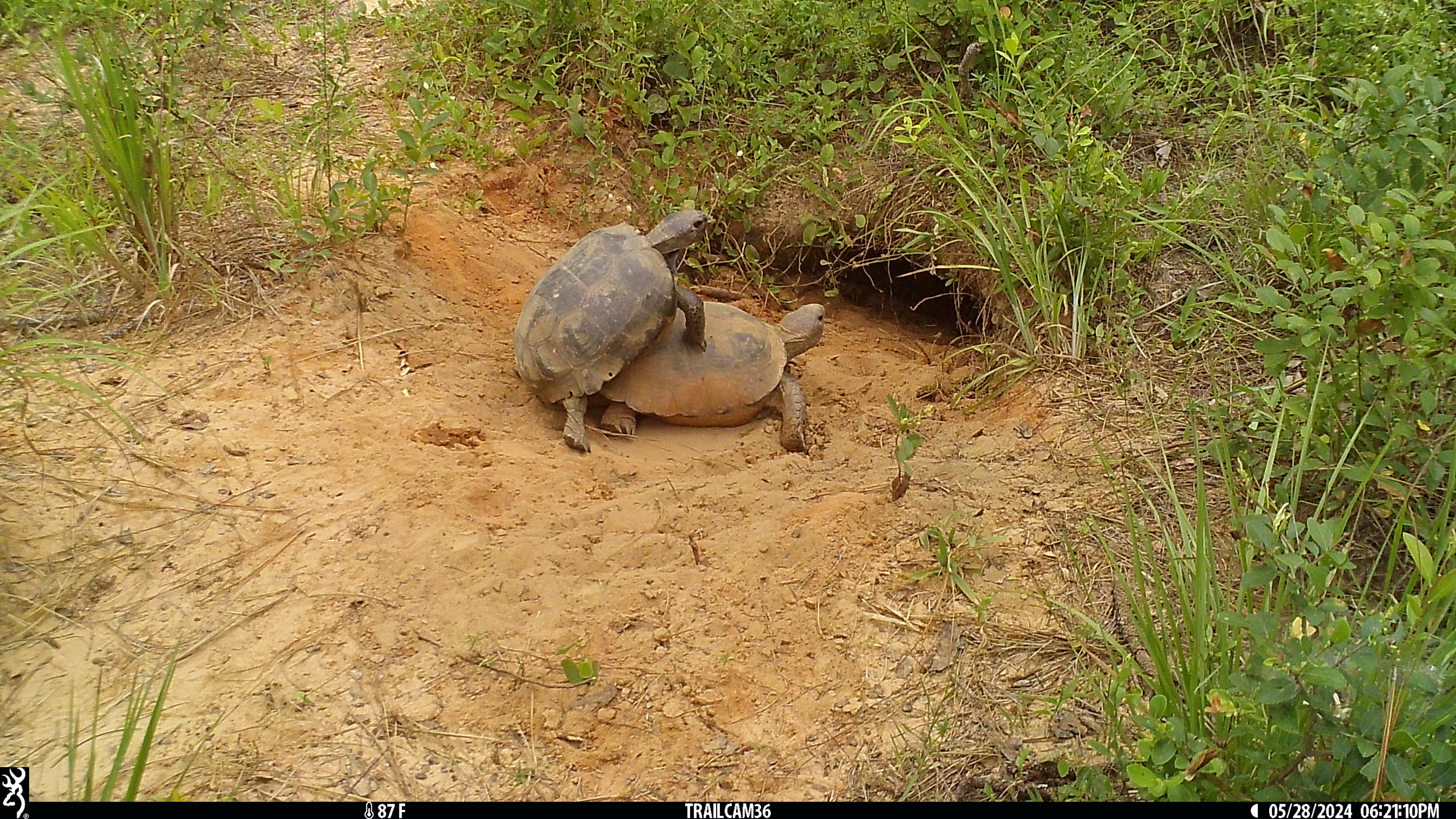
The results of our 2024 mating study show that mating frequency peaks in July in Louisiana, this is earlier in the year than other studies conducted in south Georgia have found. It also appears that the same two or three adult males at each site are attempting to mate with females. This confirms our suspicions that the gene pool in Louisiana populations is small. We are continuing to monitor mating behavior at two sites in Louisiana for 2025 using camera traps. This work has been accomplished through the cooperation of Louisiana Department of Wildlife and Fisheries (LDWF), University of New Orleans (UNO), Weyerhaeuser Company, Land Trust for Louisiana, and a private landowner.