
Dirk Stevenson (Altamaha Consulting)
In this latest installment from Dirk Stevenson, tales from the Okefenokee and lessons on every tortoise's favorite croaker, the gopher frog.
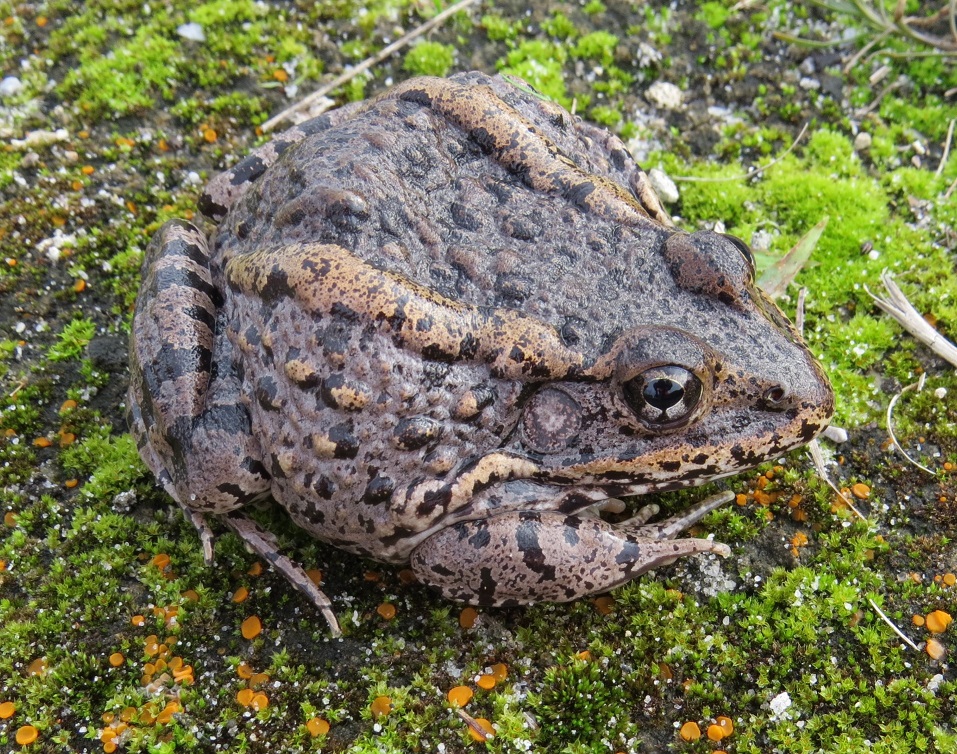
“I have always liked frogs. I like the looks of frogs, and their outlook, especially the way they get together in wet places on warm nights and sing about sex.”
Archie Carr From The Windward Road (1956)
Last month I traveled to the Okefenokee Swamp to measure a Suwannee alligator snapping turtle, Macrochelys suwanniensis. The turtle was captured incidentally by American alligator researchers with the University of Georgia’s Coastal Ecology lab. There are few recent observations of alligator snappers from the swamp and I helped process the turtle. We measured the carapace, weighed the turtle−in a sling ranchers use to weigh calves−and implanted a pit tag into its muscular tail. We placed the huge turtle on the ground next to a picnic table, in the shade of a live oak. And there he sat, for some time, unmoving, jaws ajar. His golden eyes, rimmed with flappy tubercles, would turn and track the movements of anyone who approached.
He was a solid 66 pounds. Bear in mind that they come twice that size farther downstream, in the middle reaches of the Suwannee River’s main stem. Straddling the turtle, I noticed the tan shell was worn smooth, pitted, and decorated with a fine network of algae, splotched on his back haphazardly as if in a Jackson Pollock painting.
When I am near the Okefenokee, I invariably think of Anna and Albert Wright and the landmark Cornell University expeditions to the swamp they led 100 years ago. Albert Hazen Wright (1879−1970) and Anna Allen Wright (1882−1964) married in 1910 and were companions in the lab and field for 55 years. Emphasis on field − these two traveled widely throughout the United States in search of native amphibians and reptiles, recording habitat details and snapping 12,000 photos along the way. The Wrights co-authored the voluminous Handbook of Frogs and Toads of the United States and Canada (1949) and Handbook of Snakes of the United States and Canada (1957), both natural history classics. Their studies on the Okefenokee were instrumental in the swamp’s designation in 1937 as a national wildlife refuge.
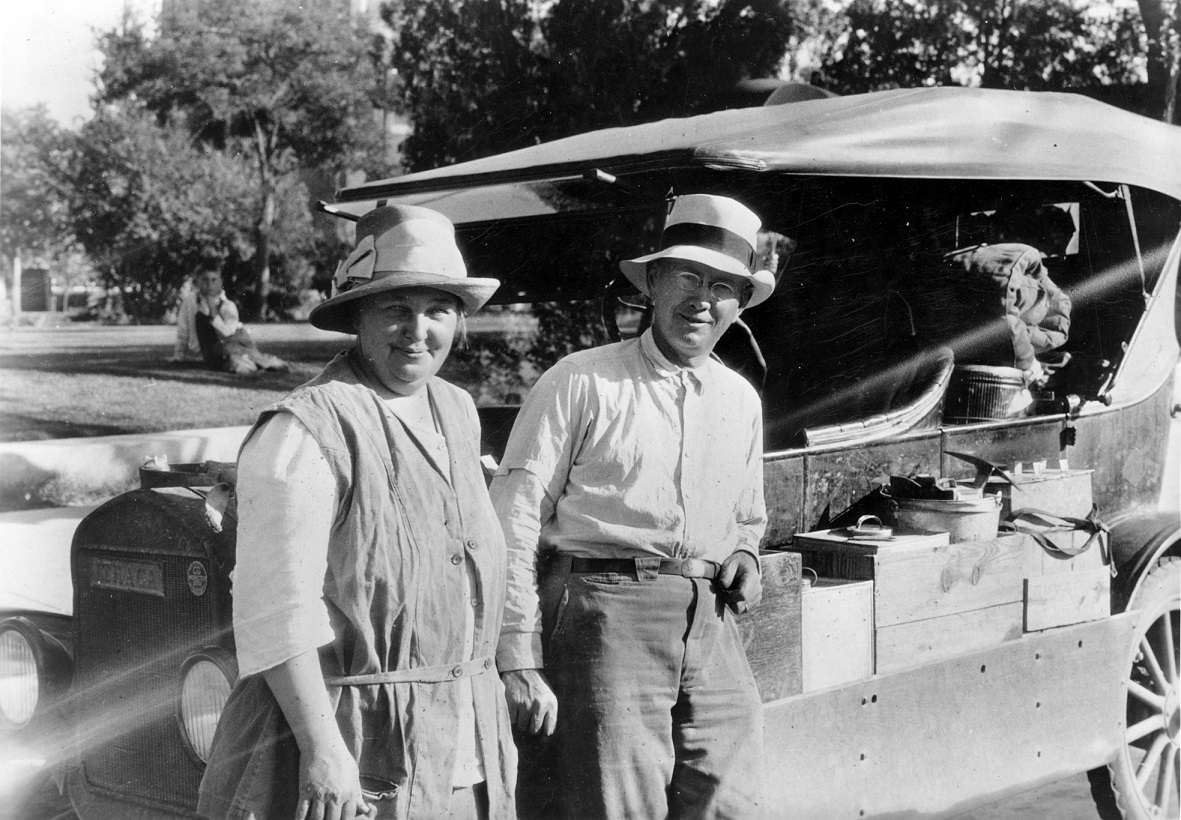
The Wrights and colleagues quickly ingratiated themselves with the resourceful, hard-working folks who lived in the Okefenokee, learning about the swamp’s vast interior and its local flora and fauna from residents of Billys Island and Chesser Island.
There is the romance of wilderness and discovery inside what has long been one of my favorite books, Albert Wright’s Life Histories of the Frogs of Okefinokee Swamp, Georgia (first published in 1932; reprinted 2002 by Cornell University Press). The Wrights were fanatical about frogs, and the diversity of the wetland wonderland called the Okefenokee left them spellbound. The reader is sure to grin often: throughout the work, Wright calls singing frogs “croakers.”
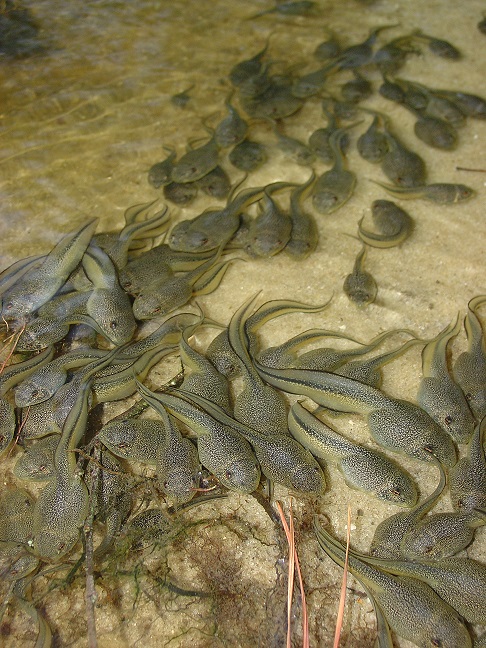
The account for Rana heckscheri captures the discovery of a new species. On a summer side trip to nearby Alligator Swamp, Callahan, Florida, just east of the Okefenokee, the Wrights encountered strangely-patterned schooling tadpoles, which they suspected represented an undescribed frog. Imagine their anticipation when, a month later, they returned at night. They heard a croaker issue a grunty snarl, something they had never heard before. On the bank above the black water, Anna found the first specimen. Soon enough, Albert described the river-swamp frog, also known as the alligator frog.
The Wrights seemed particularly fond of gopher frogs (Rana aesopus at that time; today, Lithobates capito), repeatedly visiting gopher tortoise burrows peppering a sandhill on Trail Ridge (the Okefenokee’s eastern border), where on one visit they observed eight individuals around midnight. From Albert’s field notes: “frog like woodchuck make for hole”; “Anna’s friend next to log near tortoise burrow.” In the “Enemies” section of the gopher frog account, Albert implied that “gopher snakes” (i.e., the eastern indigo snake, Drymarchon couperi) would potentially prey on gopher frogs.
A chorus of croaking gopher frogs is described as “a remarkable performance…a uniform continuous roar, like the surf.” A full day after a torrential rain, “about a dozen began croaking in a cypress pond on Chesser Island before darkness came on.” When the posse of songsters erupted late in the afternoon “one of the residents called it the monster.”
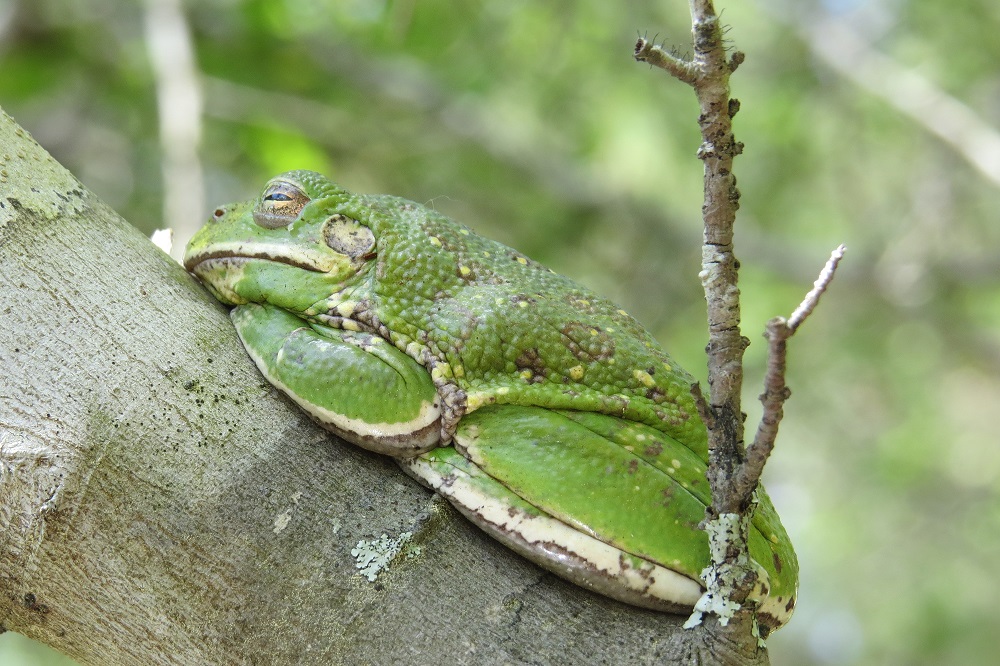
When breeding, gopher frogs are partial to new water, temporary ponds flooded by dramatic rain events. The suite of amphibious associates that share breeding sites with gopher frogs includes some of our favorites: ornate chorus frog, barking treefrog, eastern tiger salamander, mole salamander, striped newt. On one January morning, I found three adult gopher frogs under a plank resting on the floor of a borrow-pit wetland. I suspect they are capable of respiring through their skin in really cold water. They resembled colorful pine cones.
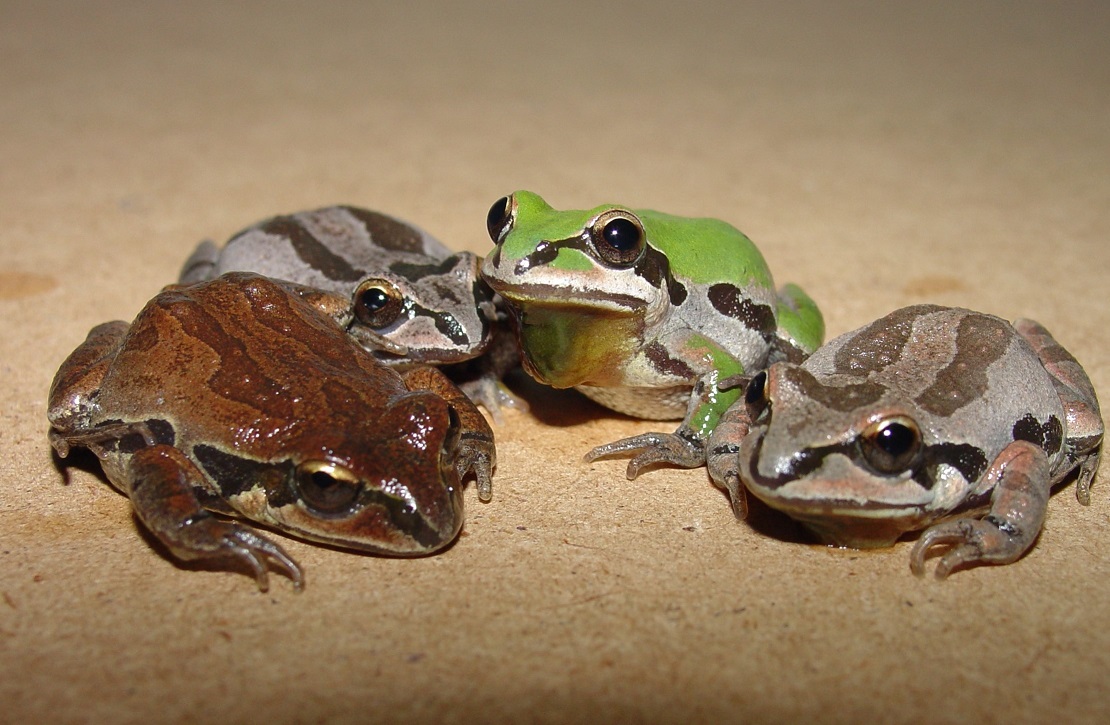
The work of longtime tortoise scholar and conservationist Dick Franz has revealed that gopher tortoises have been in the southeastern coastal plain for at least two million years, ample time for a frog to develop an intimate commensal relationship with the burrow. At the Ordway Preserve in central Florida, Franz documented gopher frogs dispersing upwards of a mile from breeding ponds, with some frogs hopping the same route and lodging in the same tortoise burrows both coming and going. Frogs have been found to migrate even farther in North Carolina.
Henry G. Hubbard, an entomologist who in the 1890s excavated – by hand, one assumes! –gopher tortoise burrows in central Florida and described six species of obligate invertebrate commensals, left behind publications full of delicious prose. The gopher frog is a “batrachian parlor boarder…a beautiful form with soft subterranean coloration…and lives on terms of perfect friendship with the tortoise.” Although it was published in an 1893 Science article titled “The Florida Land Tortoise”, Hubbard’s remark that “specimens have been seen which would weigh more than a pound, and individuals of colossal proportions are reported to exist” seems imaginative.
Looking over my journal, I see that over time my field notes have adopted characteristics of Wright and Wright’s writings. From recent gopher frog entries: “We walked toward the dumbbell-shaped cypress dome where Chris heard a gator bellow during a light rain two days ago… En route in thick wiregrass we notice a bare spot of clean, polished soil just outside a remnant longleaf pine stump. Could this be the work of a gopher frog?”
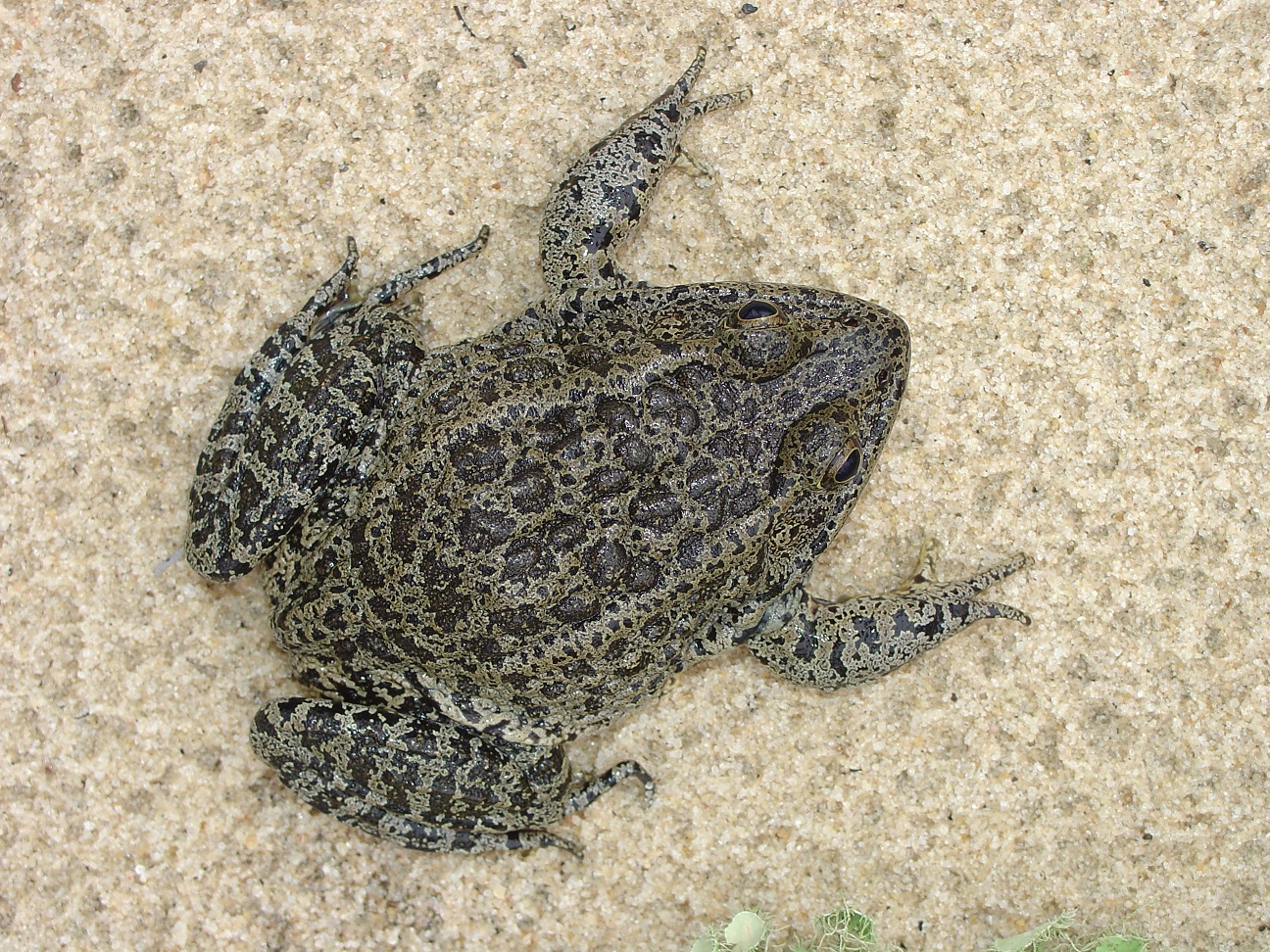
Subsequently, we met and then regularly encountered an adult capito−we called her Penelope−resting on this feeding pad. June was hot, rainy, and humid. “Frog on surface in late morning, temp in high 80s, but she perches in partial shade, and the humidity is high; frog can see me from 10 feet away and with two direct hops disappears into the depths of the stump… Penelope likes it hot and she is no fool.”
Herping, like hitting a baseball, is a streaky affair, with many peaks and slumps. You might go three years without an Ophisaurus attenuatus (slender glass lizard; see Dirk's earlier story "Some Folks Call 'em Joint Snakes") encounter and then see three in one week. One summer in central Florida, I regularly encountered southern black racers with prey: a racer carrying an adult scarlet snake, xeric hammock, mid-afternoon; a racer crawling under saw palmettos, holding an adult pygmy rattler off the ground and just behind the head, like a bitch toting a pup; a big racer with an adult female gopher frog sideways in its mouth, midday, sunny, 15 feet from a tortoise burrow. Well-developed eggs dripped from a slit in the frog’s belly.
With colleagues, in 2010, I assembled all prey records known for wild eastern indigo snakes. Remarkably, the gopher frog and two other vertebrates that are frequent tortoise burrow commensals, the Florida mouse and Florida pine snake, have yet to be documented in the diet of Drymarchon couperi. Low-hanging fruit for future natural history publications.