
Volume 46, Number 1
Dear GTC Members,
I’m excited to serve as the new Junior Co-Chair of GTC alongside Jeff Baker and to help support an organization that I’ve learned so much from over the years. While this is my first official service role with the Council, I’ve been attending meetings since 2018, when I began research on the nesting ecology and translocation of gopher tortoises in collaboration with Elizabeth Hunter as a research assistant professor at Georgia Southern University. I was originally trained as a behavioral ecologist interested in the social lives and invasion ecology of insects, particularly wasps and bees. However, I caught the tortoise bug while searching for nests at Nokuse Land Conservancy’s translocation site in Walton County, Florida, and while diving to hand-capture tortoises at Dave Rostal’s long-term study site on Fort Stewart, Georgia, and I’ve been finding ways to keep tortoises as part of my research life ever since. I’m now a Research Scientist at Virginia Tech and continue to study tortoise translocation and conservation biology at Nokuse and elsewhere, albeit from a bit farther away. I remain continually impressed by the collaborative spirit and welcoming attitude that define GTC and the gopher tortoise research community at large. Together, we’re tackling the formidable challenges facing our favorite keystone species.
Happy Gopher Tortoise Day to everyone on April 10! It’s the perfect excuse to celebrate this amazing ecosystem engineer and raise awareness for the tortoise, the many commensal species that share its burrows, and the upland habitats they all depend on. It’s also a great day to spring for a gopher tortoise license plate if you’re in Florida, or a replica plate to decorate your burrow if you (like me) live outside the range.
I’m also very much looking forward to seeing everyone at the 2026 meeting, November 6–8 at Gulf State Park in Gulf Shores, Alabama. Jeff Baker has been hard at work making sure we have another fantastic gathering full of gopher tortoise science, conservation, enthusiasm, and general merriment. I hope you’ll join us for what promises to be another great meeting.
Best,
Kevin Loope, GTC Junior Co-Chair
Keep reading for the latest news and announcements from the Gopher Tortoise Council, including:
- Save the date for the 48th annual GTC Meeting
- Become a GTC member
- Support gopher tortoise conservation with the gopher tortoise license plate
Caitlin Jones, Kristen Hecht, and Michelina Dziadzio (Florida Fish and Wildlife Conservation Commission)
As humans increasingly share space with gopher tortoises, they are likely to interact more in the lives of this species. Some interventions, including reporting illegal activity or helping a tortoise cross the road, can help. But other actions, like people moving tortoises away from their homes, can cause unintentional or intentional negative impacts. Unfortunately, such actions can lead to tortoises being unable to return home, creating a problem known in Florida as a waif tortoise.
Dirk Stevenson (Altamaha Consulting)
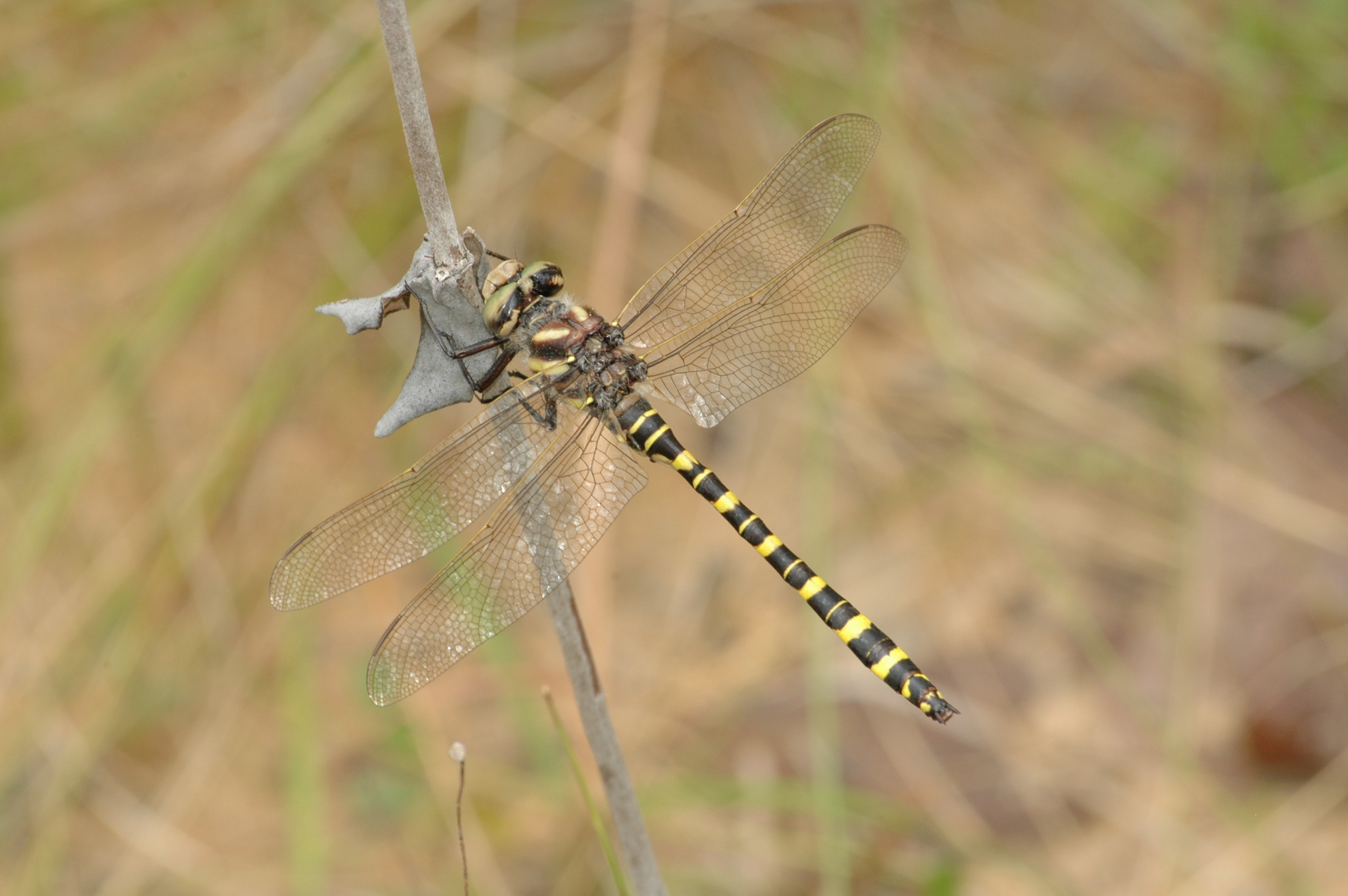
The long-legged form of ecologist Matt Flenniken slides across the turkey oak sand ridge. His right boot settles briefly in the yellow sand of an enormous gopher tortoise burrow apron. Yesterday’s rain left the longleaf pine cones, fortified by thick, spine-topped scales, heavy and closed tight. But today is good insect weather. Antenna in hand, Matt pauses to listen to the receiver. The quarry he tracks is not what you might expect. An Assistant Research Scientist with the Florida Fish and Wildlife Conservation Commission, Matt is following a remarkable dragonfly—the Say’s spiketail—to better understand its role in this dynamic ecosystem.
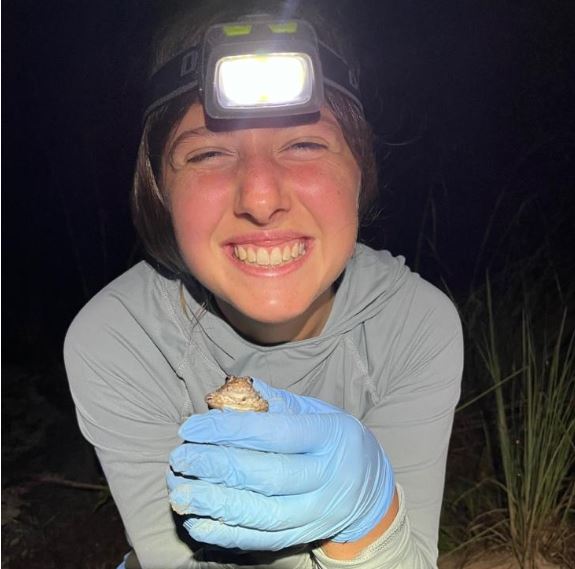
Metapopulation dynamics of Gopher Frogs (Rana capito) in Georgia, Eva Kerr (University of Georgia)
Each year, GTC awards 1-2 grants of up to $3,000 each to undergraduate and/or graduate students researching gopher tortoise biology and ecology, or other relevant aspects of upland habitat conservation and management within the range of the gopher tortoise. Eva Kerr was a Landers Grant recipient in 2025.
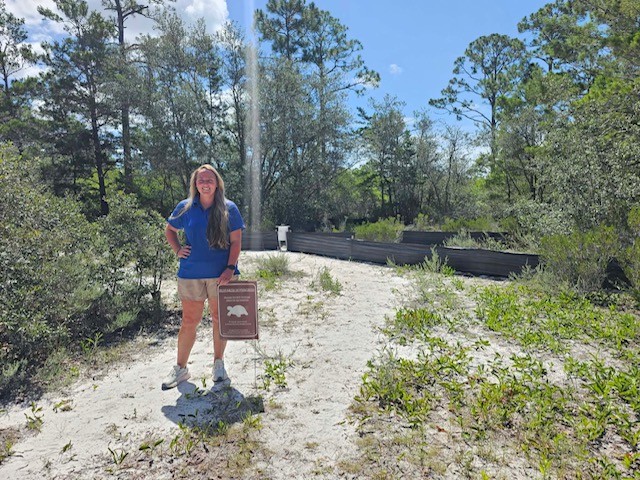
Hillary Bryan (Park Naturalist, Gulf State Park)
The GTC Environmental Education Grant was established to support educators and organizations committed to developing educational projects about the gopher tortoise and the fascinating world in which it lives. The grant also honors Donna J. Heinrich, an environmental educator, whose life was dedicated to conserving wildlife and their associated habitats.
The Gulf State Park, known for its beaches and hiking trails, is becoming a hands-on learning site for gopher tortoise research through support from the Donna J. Heinrich Environmental Education Grant. The project aims to assess and monitor gopher tortoise populations within the park, develop an inventory of coastal upland species, engage local students in field-based research, and create educational programs for the local community and park visitors.
Some recently published articles about gopher tortoises, their commensals, and upland communities in the southeast. Check out GTC's Education & Outreach page for more literature, including snake and tortoise bibliographies.