Dirk Stevenson (Altamaha Consulting)
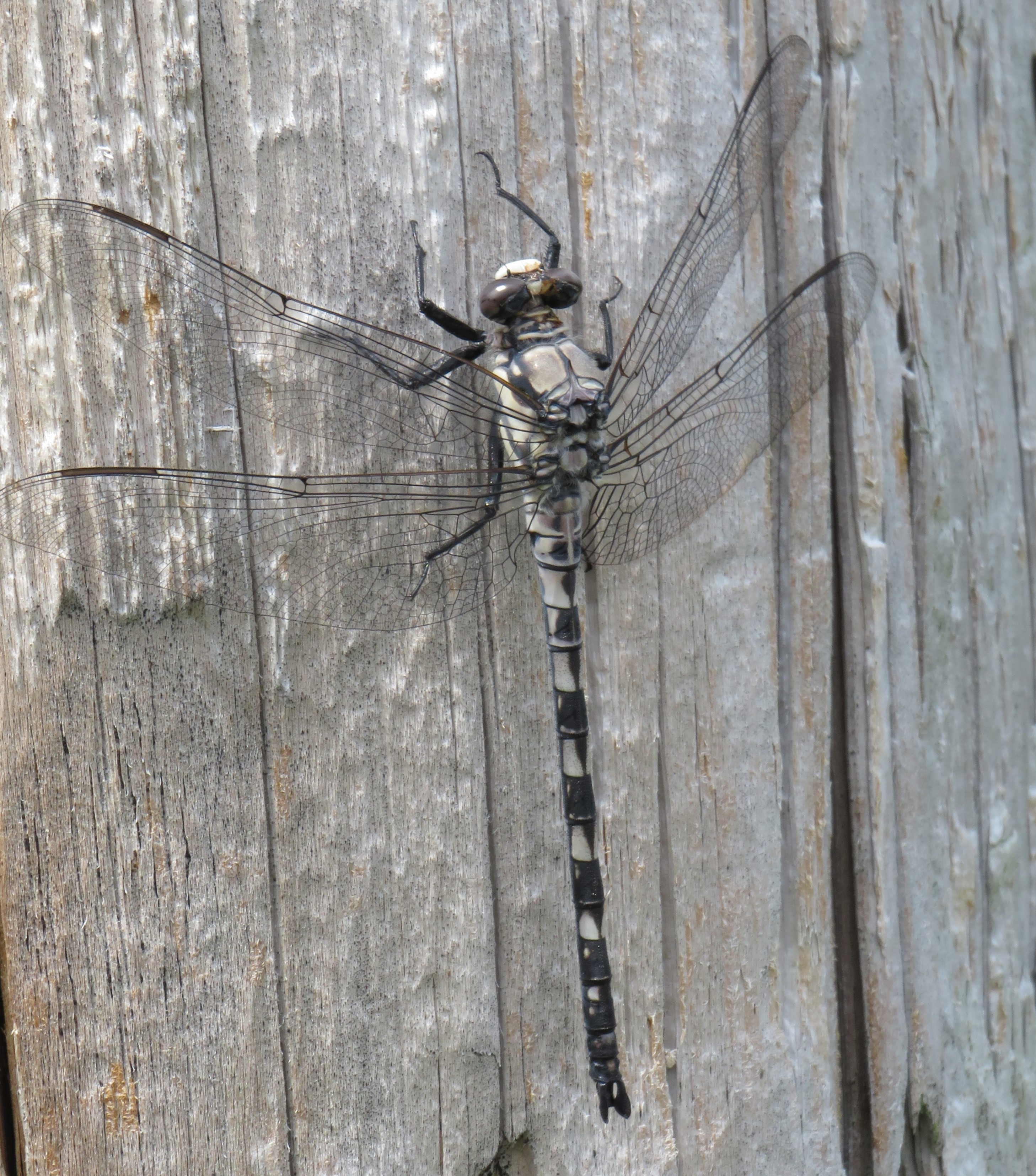
The long-legged form of ecologist Matt Flenniken slides across the turkey oak sand ridge. His right boot settles briefly in the yellow sand of an enormous gopher tortoise burrow apron. Yesterday’s rain left the longleaf pine cones, fortified by thick, spine-topped scales, heavy and closed tight. But today is good insect weather. Antenna in hand, Matt pauses to listen to the receiver. The quarry he tracks is not what you might expect. An Assistant Research Scientist with the Florida Fish and Wildlife Conservation Commission, Matt is following a remarkable dragonfly—the Say’s spiketail—to better understand its role in this dynamic ecosystem.
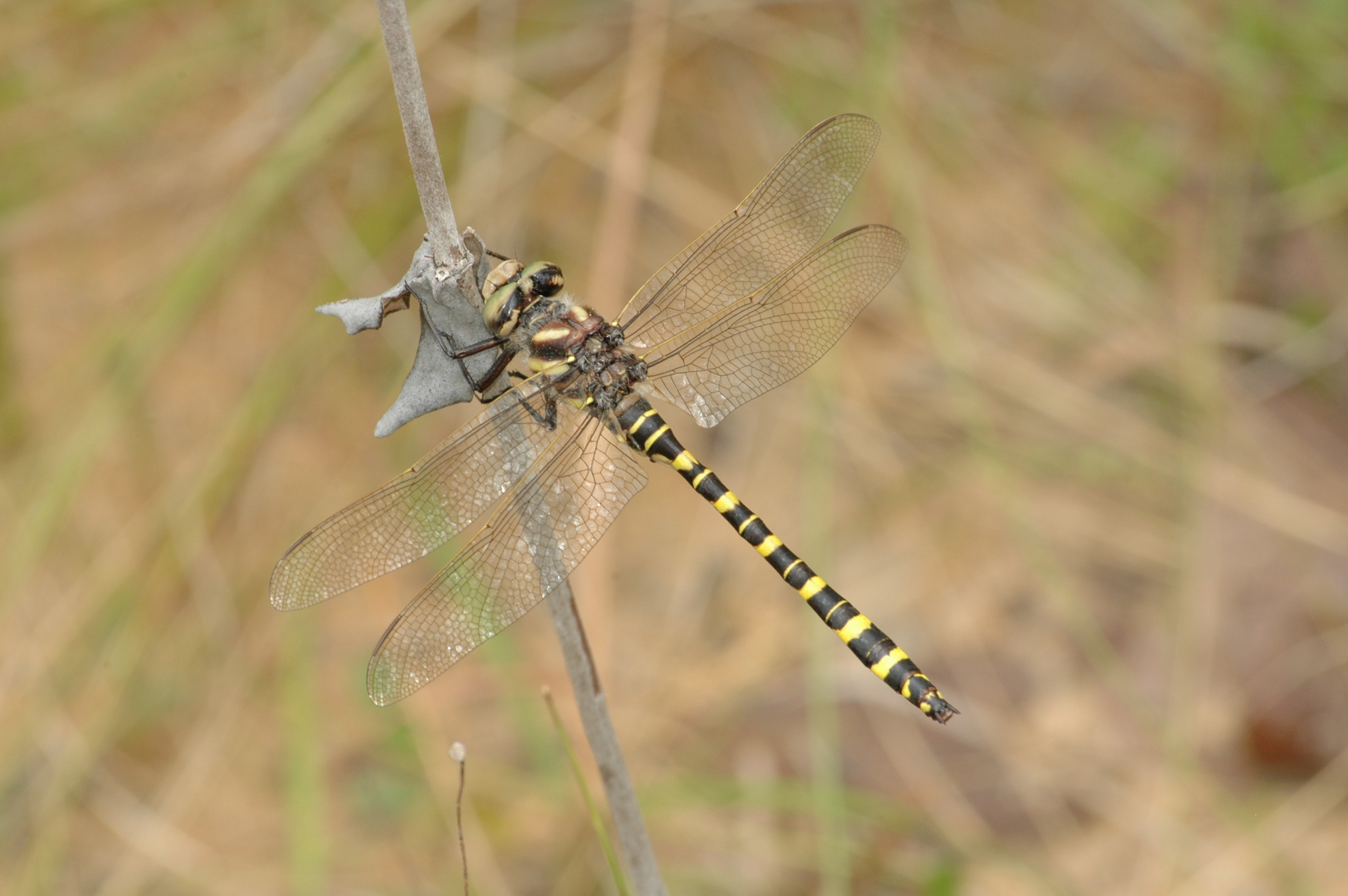
The gorgeous Say’s spiketail, Zoraena sayi (formerly Cordulegaster sayi; named for early American entomologist Thomas Say [1787–1834]) is found only in the Coastal Plain of southern Georgia and the northern third of Florida. Adults have black and magenta thoraxes patterned with green-gold bands the color of new turkey oak leaves. You will gasp when you spot one hanging like a beautiful ornament from a grass stem or sapling.
Spiketails (Cordulegastridae) are so named because of the spike-like ovipositor located on the tip of the female’s abdomen. Females will hover vertically a few inches above a seepage and, with a bouncy, sewing-machine-like motion, repeatedly dip their abdomens into shallow mucky water to deposit eggs. All spiketails possess vivid black-and-yellow markings.
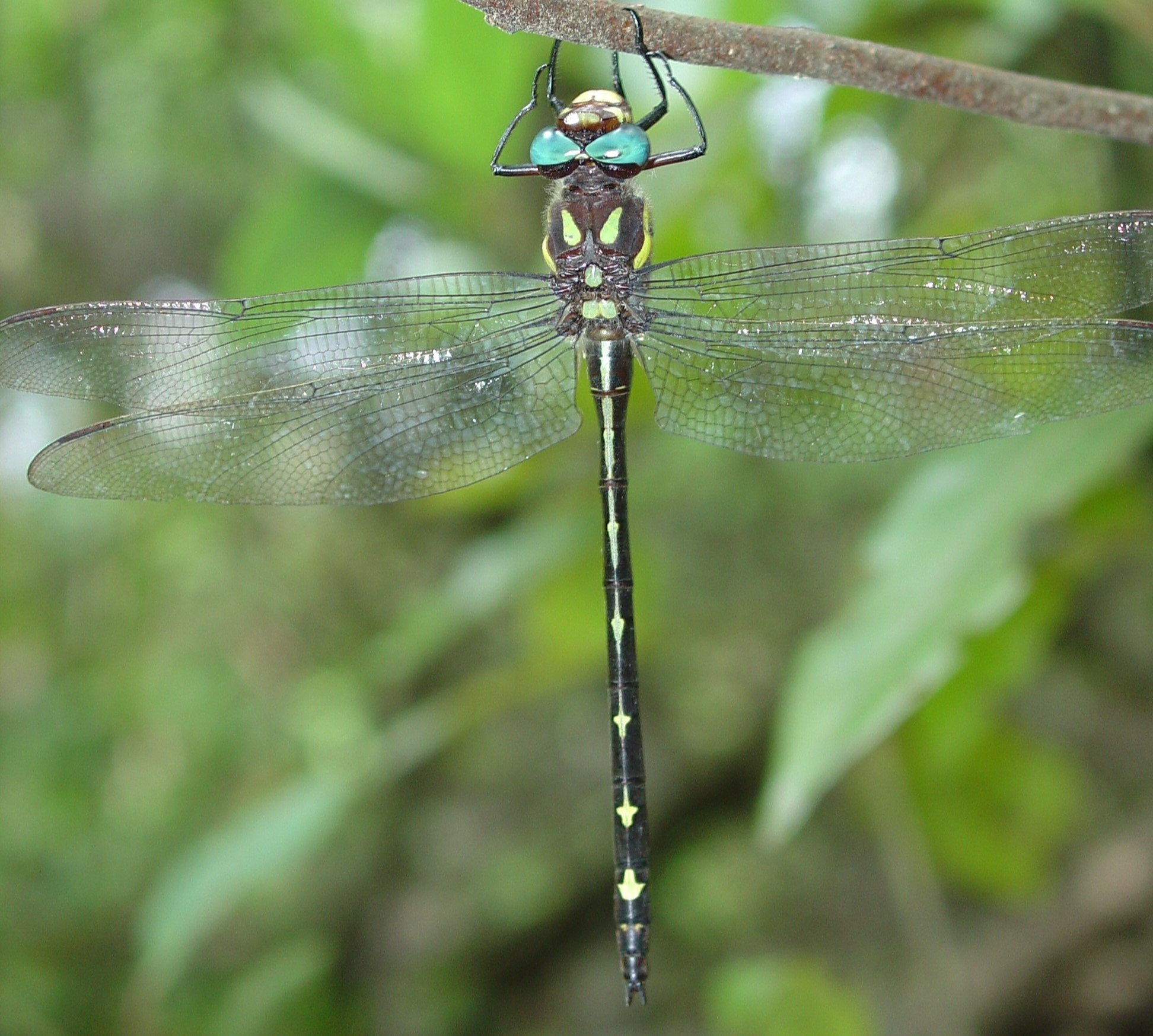
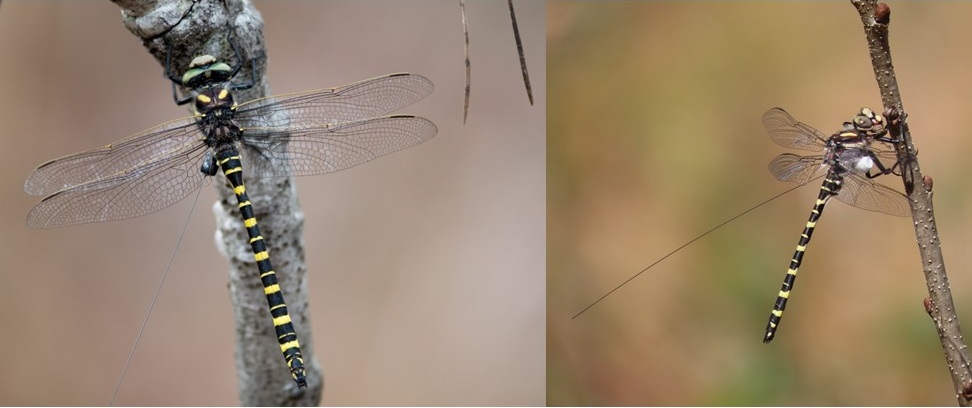
How on Earth does one track a dragonfly? After capturing one with a large butterfly net, Matt affixes a miniature radio transmitter weighing only a fraction of a gram to the ventral side of the thorax, behind the legs. Zoraena sayi is an early spring “ode” with a brief flight period; adults are typically on the wing from early March-late April. His study sites are on public lands located on the Trail Ridge in northeastern Florida.
Courtesy of these featherweight transmitters, which do not appear to impede movement or influence behavior, Matt and his colleagues have already made some fascinating discoveries. Foraging occurs in the waving grasses of sunlit longleaf pine savannas. Matt and colleagues commonly saw their charges capture and devour small grasshoppers, wasps, and bees. They also found that sayi adults periodically roost high among the canopy limbs of mature longleaf pines. Notably, one of their study animals moved close to 1,000 meters in a single day!
Most spiketails pair up close to the seepage areas where they lay their eggs. However, on numerous occasions Matt observed mating Z. sayi in the sandhills far from seeps. These observations help to elucidate the hidden ecology of this unique southeastern species and may prove useful in guiding conservation efforts.
In the mid-1990s, I became interested in Say’s spiketails. At this time, the species was known from only five sites on the globe and was considered one of the rarest dragonflies in the eastern United States. Soon it would be petitioned for federal listing under the U.S. Endangered Species Act.
Say’s spiketail larvae (also called nymphs) develop in perennial mucky seepages located at the base of sand ridges. To get to the seeps, grab your game face, don jungle boots, and apply canebrake rattler repellent. You will need to negotiate (go through, over, or under) an impenetrable ecotone of inkberry (Ilex coriacea), wild cane, and countless Smiliax vines thick as mariner’s ropes. You will incur scratches, but it’ll be worth it. Continue downslope toward monstrous loblolly bays, their rock-hard furrowed trunks splotched with orange and bubble gum pink lichens.
The idyllic little seeps, lined with bright green sphagnum, form shallow sand-bottomed rills that dribble through fields of forest green dog hobble (Leucothoe axillaris). Let me emphasize, perennial seeps are perpetually saturated, even during severe droughts. In southern Georgia, I looked on as a big male eastern indigo snake slurped a long drink from a seep located several hundred meters downslope from the tortoise burrow where he wintered.
Muck beds, formed by slow but steady decomposition of organic leaf and twig litter, are stable mini-ecosystems that abound with small invertebrates. (Gently stir the soupy muck and meet coiled ruby-red worms and steel blue amphipods.) And, oh, the salamanders! Southern two-lined and dusky sallys breed in the seeps, and the hallmark of spring-fed habitats are Pseudotriton spp. (the red and mud salamanders).
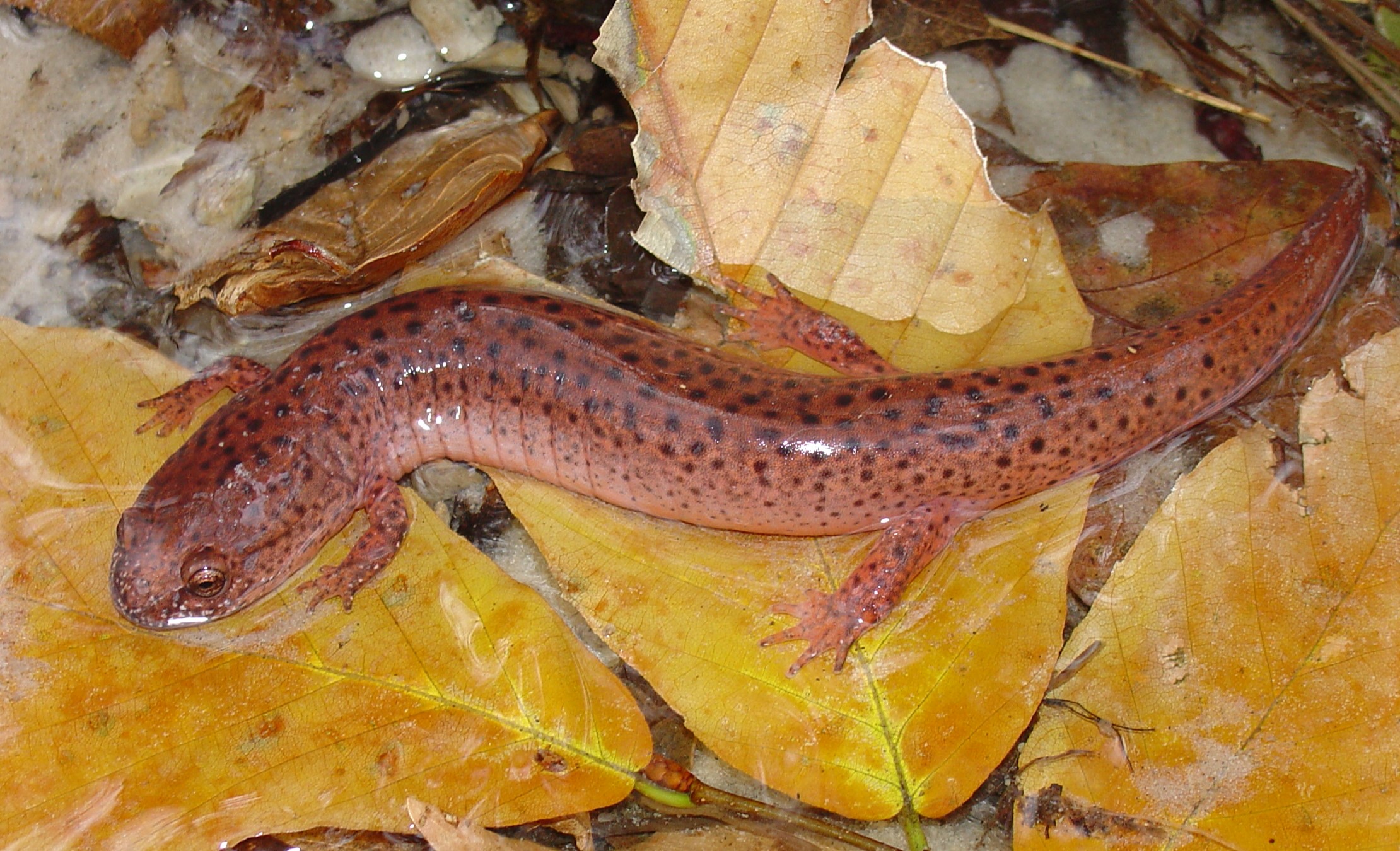
A devout Pseudotriton fetishist with an advanced degree in noodling, I already had a pretty good handle on where to look when odonatologists in search of Say’s spiketail populations contacted me in the mid-1990s. Subsequently, I and others located many new sites in both Georgia and Florida by sampling muck beds for nymphs.
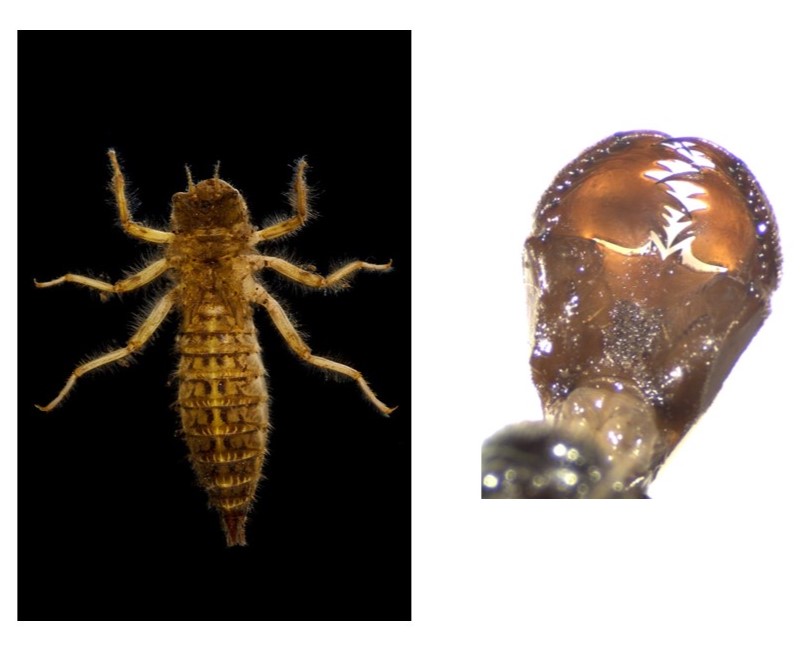
The nymphs are bizarre little monsters. Especially hairy, these cryptic carnivores lie buried in soft muck up to the tips of their elevated eyes for three to four full years! They grow slowly and molt six times, with each subsequent instar increasing in size; the larger nymphs are almost certainly preying on tiny salamander larvae, although this has yet to be documented. When it is, we can add Z. sayi to the list of arthropods that eat vertebrates. Similarly, Coastal Plain red salamanders also have lengthy larval periods of about two to three years.
Other weird creatures reside here. A coelacanth among Odonata, the huge gray petaltail (Tachopteryx thoreyi) belongs to the family (Petaluridae) containing the most primitive of living dragonflies. Relatives of our Tachopteryx go back in the fossil record to the Jurassic Period.
In a dramatic departure from the norm, the strange nymph of the gray petaltail, although gilled, doesn’t live in the water as do all other dragonflies during their aquatic stage. Instead, it inhabits damp moss and litter at the origin of the seeps, where ground water scarcely drip-trickles to the surface. A zoologist friend kept a Virginia specimen in a margarine container stocked with a few damp leaves; twice a month he tossed in a cockroach. This living fossil habitually perches on tree trunks and is remarkably unwary—it may mistake your standing form for a trunk and light on your torso, just as one of its ancestors would have landed on the leg of a brontosaurus.
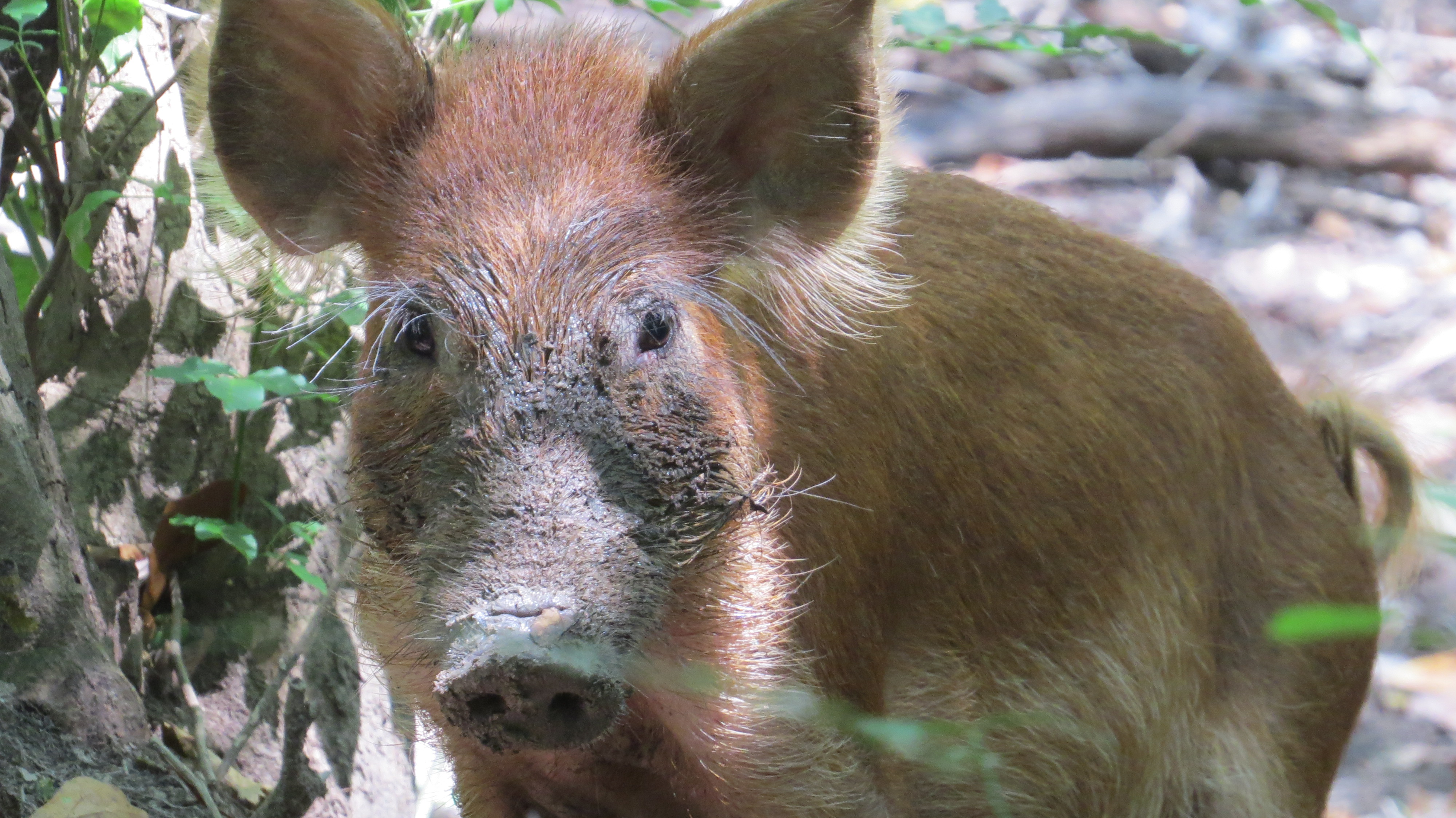
In the intervening years, Say’s spiketails have been found at quite a few sites on protected lands, enough that federal listing of the species was not warranted. This dragon, a longleaf pine sandhill endemic, is state-listed as threatened by the Georgia Department of Natural Resources, and concerns about conservation in Florida prompted Matt’s study. Populations range-wide are threatened by ongoing habitat loss and degradation, including by the activities of feral swine (Sus scrofa). Wild pigs never met a muck bed they wouldn’t roll in, and in doing so surely affect the biome of these communities. Aggressive control of wild pigs is now underway at some sites, finally, thankfully.
Despite the protected status of many of the public lands where Say’s spiketails reside, new research suggests that a large proportion of suitable habitat for the species may be located on unprotected, private lands. As landscapes continue to change, partnership and collaboration among public and private conservationists will be important to safeguard this iconic dragonfly of the Southeast.
I heard excitement and happiness in Matt’s voice when he told me of his work with the Say’s spiketail. He described them as “strikingly beautiful, charismatic, captivating.” His work with these wonderful dragonflies will continue in 2026 and will focus on understanding how adult movement and habitat use may change in response to habitat management and restoration.