
Exploring the connection between gopher tortoise home range size and mating opportunities to elucidate the mating system (Karin Ebey, Eckerd College)
Each year, GTC awards 1-2 grants of up to $3,000 each to undergraduate and/or graduate students researching gopher tortoise biology and ecology, or other relevant aspects of upland habitat conservation and management within the range of the gopher tortoise. Karin Ebey was a Landers Grant recipient in 2025. Keep reading to learn more about her research project.
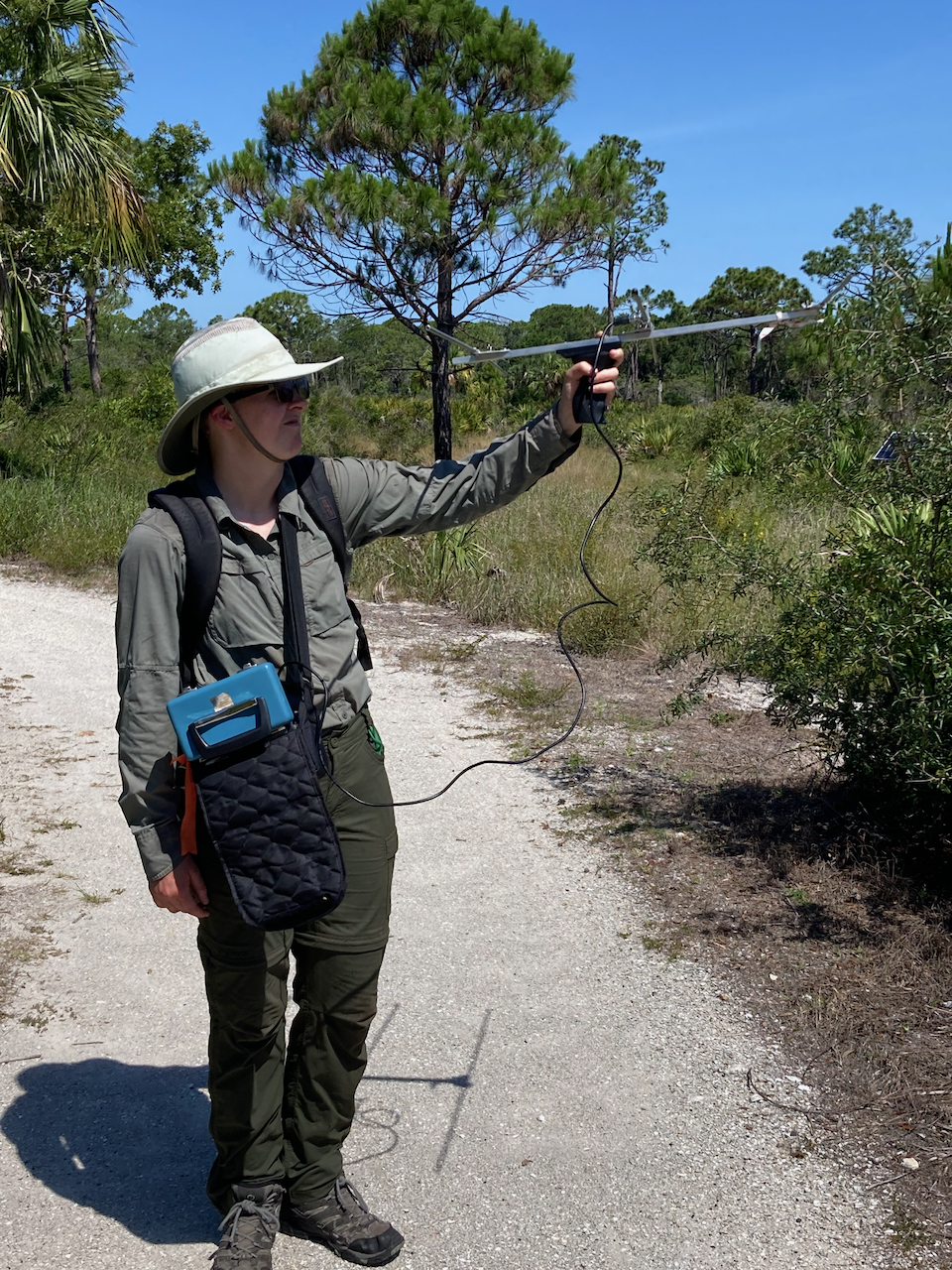
As a student at Eckerd College, I worked with Dr. Goessling and Dr. Hilton on a project to study gopher tortoise (Gopherus polyphemus) movement ecology. My main question was whether individual gopher tortoise movement patterns are physiologically constrained and if they vary by sex. This question addresses a central topic in spatial ecology, namely identifying what determines animal movement patterns, including both external and internal factors. Given different sex-based selection pressures in mating and reproduction, movement patterns often vary between males and females in predictable manners. Physiology may also constrain movement patterns in a way that can obscure sex-specific selection.
At Boyd Hill Nature Preserve in St. Petersburg, Florida, we attached GPS loggers to 30 tortoises and assessed their aerobic physiology by baseline and exercise induced plasma lactate levels. We obtained data of each tortoise’s position every 15 minutes from September 2024 to February 2025. We analyzed the huge amount of data (over 170,000 locations) to characterize tortoise movement patterns by determining the total distance traveled, home range area, and number of burrows used over the course of the study. Then we statistically tested if tortoise movement metrics varied by physiology, size, or sex.
We found that in both male and female tortoises total distance traveled was positively related to body condition and negatively related to baseline lactate concentration (which is an inverse metric of aerobic fitness). Thus, total distance traveled was physiologically constrained by aerobic fitness (initial lactate concentration) and energy reserves (BCI). However, home range area and burrow use were not related to any physiological or anatomical metrics.
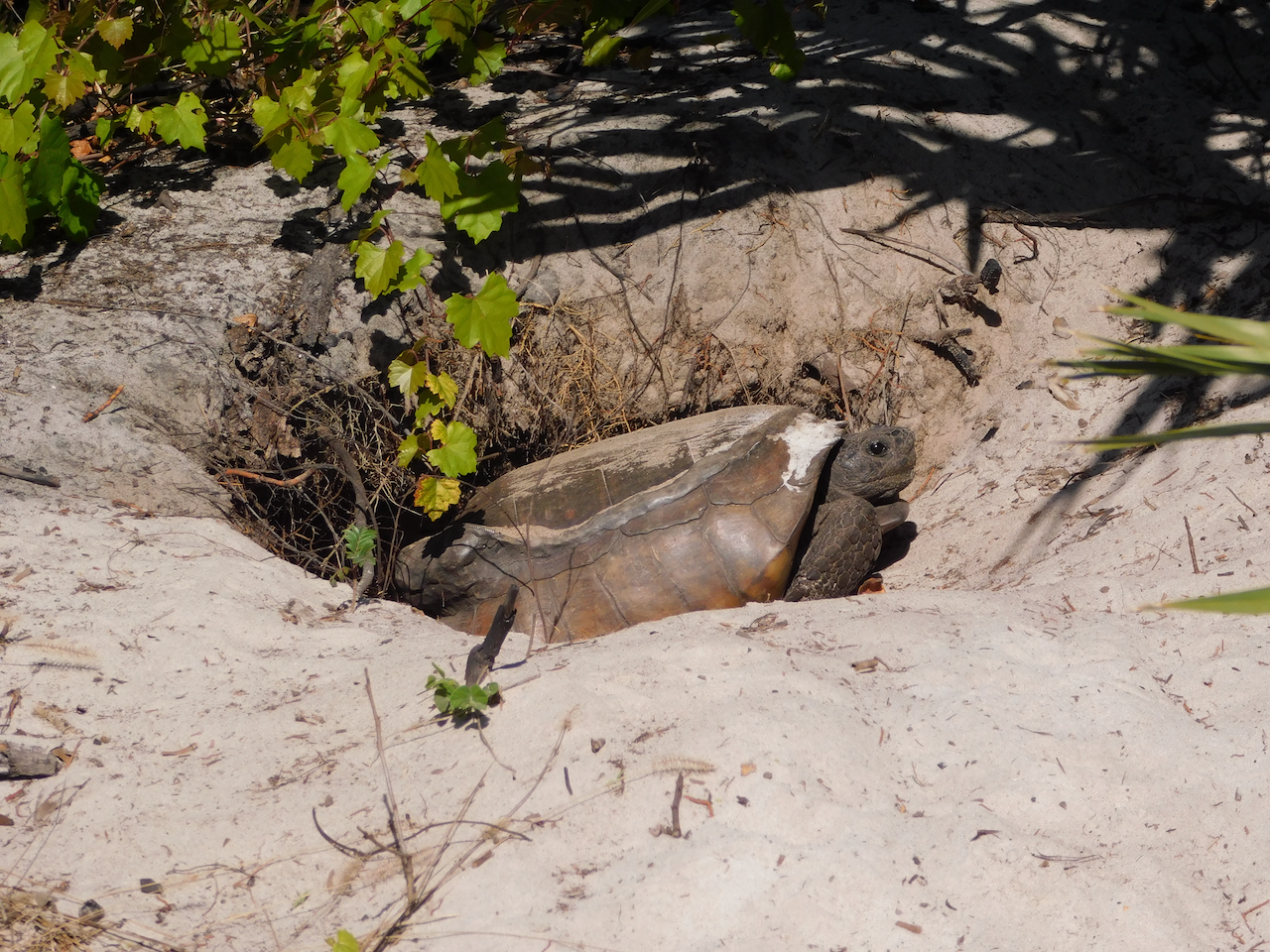
Consistent with many prior studies we found that male tortoises had a larger home range area than female tortoises (on average 1.15 and 0.46 hectares respectively). However, there was not a significant difference in total linear distance traveled between male and female tortoises, with both averaging 54 kilometers over the course of the study (about 340 meters per day).
Overall, we found that in both male and female gopher tortoises total distance traveled is physiologically constrained, but that home range area and burrow use were not. The difference in results between the different movement metrics suggest that home range area and burrow use reflect trade-offs in movement patterns as limited by the physiologically constrained total distance traveled. We found that there was not a significant difference in total distance traveled between males and female gopher tortoises, but that males have larger home range areas. These results suggest the presence of sex-based movement strategies in gopher tortoises, which may reflect different pressures from the mating system. Male gopher tortoises perform high-displacing movements across their large home range, and the most aerobically and energetically fit males will be able to travel farther and encounter and mate with more females. In contrast, female gopher tortoises perform more small-displacing movements within their smaller home range, which may allow females to defend their nest sites.
I thank the Gopher Tortoise Council for supporting this research. In addition to addressing my movement ecology question, we have also been able to use the GPS logger data to address additional questions. For example, the GPS loggers recorded temperature data, allowing us to examine tortoise winter behavior (movement patterns and thermoregulation) in the southern part of their range.